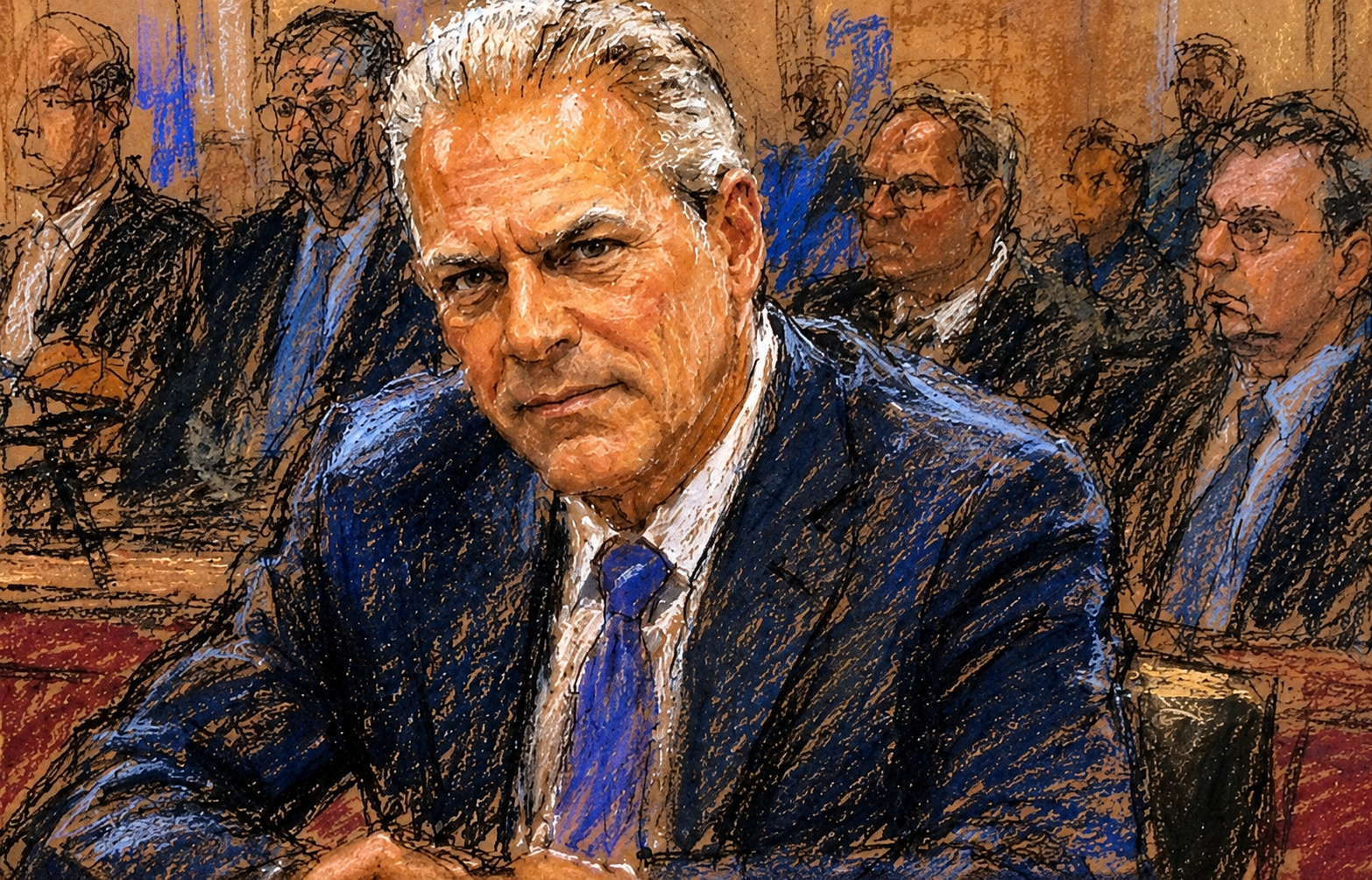
In Chicago’s toughest courtrooms, where the stakes are counted in years of freedom and eight-figure verdict exposure, LCA Fellow Steven B. Borkan has built a reputation that travels ahead of him. Plaintiffs’ lawyers know the type: polished, fearless, relentless. The kind of defense trial lawyer who doesn’t just “handle” cases – he owns them.
Borkan – “Guido” to his friends – is the founder of Borkan & Scahill, a trial litigation and insurance defense firm that has become a go-to for municipalities and public entities, including the City of Chicago. And in a practice area that is never quiet – Section 1983 civil rights litigation, police pursuits, wrongful conviction suits, excessive force and Taser cases – he has carved out a specialty that demands equal parts iron discipline and moral clarity.
Because these cases aren’t abstract.
They are about public trust. They are about accountability. They are about how a city functions when every decision is second-guessed in a courtroom, in a headline, and in the court of public opinion. And they are about money – public money – meant for schools, roads, services, and safety, suddenly threatened by a verdict that can redraw budgets and careers.
Borkan is, unapologetically, a law-and-order lawyer. He has a special affinity for police officers, and it shows in the way he defends them: not as symbols, but as human beings doing a hard job under a microscope. He believes in rules. He believes in structure. He believes that when an officer did the right thing, the defense should be absolute and unflinching.
And when an officer – or a city – didn’t? He’s not the kind of lawyer who pretends the facts don’t matter.
He is fair. He pushes for fair settlement when it’s warranted, with his clients’ full support. He recommends resolution when the plaintiff’s demand is reasonable and the exposure is real. But if he believes the allegations are inflated, the narrative is manufactured, or the money being sought isn’t fair and just – he becomes exactly what plaintiffs’ firms fear: a ferocious strategist and a fierce trial lawyer who will take the case all the way and make them prove it.
A career built in court
Borkan’s courtroom credibility is the product of a career that began the old-fashioned way: learning litigation inside government.
After law school, he joined the Cook County State’s Attorney’s Office in the Civil Division. For five years, he represented County agencies and employees in cases involving catastrophic loss – exactly the kind of work that teaches you how government decision-making looks under legal pressure, and how quickly a case can turn on details others missed. He also served as a liaison to the court on specialized proceedings, including writs of mandamus and contempt matters – an early signal that he was comfortable in the procedural deep end.
He then moved to private practice, sharpening his trial skills in complex tort litigation. Over time, he began defending the City of Chicago and its police officers in civil rights cases – work that demands technical sophistication, emotional steadiness, and a thick skin. Municipal litigation isn’t for the fragile. These cases are politically sensitive, fact-heavy, and often litigated as much in public as in court.
In 2009, Borkan launched his own firm with long-time colleague and trial partner Tim Scahill. The partnership worked because it paired two complementary strengths: Borkan, the courtroom presence – charming, chatty, quick on his feet – and Scahill, a skilled trial lawyer in his own right, as well as a strategist and writer, the mind that dissects a case and builds the architecture of a defense. Together, they built a firm designed for one thing: trial.
Not trial as a threat. Trial as a default capability.
The cases that define the arena
If you want to understand Borkan’s niche, start with the cases that make municipal defense uniquely brutal.
Wrongful conviction lawsuits
In recent years, Borkan has handled many wrongful conviction cases – claims brought after a prisoner has been released or exonerated and receives a certificate of innocence (or wrongful conviction) and then sues the City of Chicago for damages tied to years – sometimes decades – of incarceration.
These are among the most consequential civil cases a city can face. The damages can be enormous, the juries can be angry, the facts can be complicated, and the emotional temperature is always high: a man lost years of his life; someone, somewhere, is alleged to have made decisions that led to it; now a civil jury is asked to assign responsibility and dollars.
In these cases, Borkan’s role is rarely just “defense counsel.” He is often the practical adult in the room: evaluating exposure, testing whether the plaintiff’s demand matches reality, negotiating a settlement that’s defensible to the public, and preparing – always preparing – to try the case if the other side refuses to be reasonable.
Police pursuit cases
Then there are “police pursuit” cases: the chase, the crash, and the aftermath. Someone gets hurt – maybe the driver, maybe a passenger, maybe an innocent pedestrian who simply happened to be standing in the wrong place at the wrong time. The lawsuit follows. The allegations are familiar: willful and wanton negligence, reckless disregard, failures of training or policy.
These cases can turn on a few seconds of video, a policy manual, a radio transmission, or a split-second decision made at speed. Borkan’s work here is classic trial-lawyer craft: break down the event, rebuild it for the jury, and argue the line between necessary policing and preventable harm.
Police misconduct and Taser cases
And then there are the misconduct claims, including Taser cases – where the allegation is that the device was used when it wasn’t needed, or used excessively. This is where one of the most talked-about Borkan stories comes in – because it’s equal parts dedication, curiosity, and a little madness.
To defend these cases with deeper credibility, Borkan attended police Taser training. Not as an observer – as a participant. And to understand the experience fully, he volunteered to be tased during the class.
There is video of it online. He screams. The internet, being the internet, loves it. Who wouldn’t watch a lawyer getting tased?
But the punchline isn’t the scream. It’s the seriousness behind it: Borkan believes that if he’s going to stand in front of a jury and explain what a Taser does, how it feels, and why an officer made a particular decision in a particular moment, he should know – not guess.
That’s how he operates. He does not outsource understanding.
Refusing to become a brand
For a firm handling major seven- and eight-figure trials month after month, Borkan & Scahill keeps a strikingly low profile. They avoid the media, they don’t comment on cases, they don’t perform. They don’t chase headlines.
This is unusual in an era when many firms – especially those with high-profile dockets – have marketing teams eager to publicize every win and every filing. Borkan’s philosophy is different: the work is the work. The court is the court. The audience that matters is the judge and the jury.
That restraint also signals confidence. It says: we don’t need noise to be taken seriously. Our opponents already take us seriously.
The man behind the courtroom presence
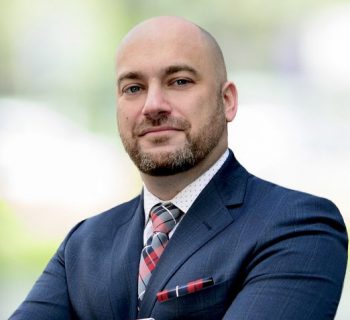
In person, Borkan is larger than life. He is friendly, gregarious, easy to talk to. The kind of lawyer who can disarm a room without losing authority. Jurors tend to like him because he reads as authentic: direct, sharp, and unafraid.
He also carries the kind of personal history that feels like foreshadowing. Before the courtroom, there was the gym. Borkan is a barrel-chested former gymnast and nationally ranked trampolinist – someone who, while performing in a circus (yes, you read that right) turned a quadruple backward somersault. Whether you take that as literal fact or emblematic truth, the metaphor holds: he has never been afraid of risk, height, velocity, or landing on his feet when the air gets thin.
He’s also a dedicated NASCAR superfan, and he has even been connected to NASCAR media through legal commentary – one more window into the way his mind works. Racing is strategy at speed; trial is strategy under pressure. The parallels are obvious, and he’d probably enjoy pointing them out.
He’s Santa every year at various events for underserved communities, which tells you something else about him: beneath the courtroom steel, there’s a guy who understands tradition, community, and showing up for people.
And yes – he is rarely without a perfectly hand-tailored suit and high-end Churchill cigar. It fits. The cigar is not costume, it’s punctuation.
A force built from principle
What ultimately makes Steve Borkan compelling isn’t just the results, the experience, or the swagger. It’s the combination that is rare in high-stakes defense work. He is:
- fiercely protective of clients when he believes they’re being wrongly accused,
- willing to settle when settlement is fair, and
- ready to try the case when the demand is not.
That is a moral framework, not just a litigation strategy.
In the Chicagoland metro area – state court and federal court alike – Borkan is a constant presence in the arena where reputations are made and broken. Plaintiffs’ lawyers who bring weak cases, inflated narratives, or unreasonable demands learn quickly: this is not a settlement mill. This is a trial shop.
And if you’re on the other side of Steve Borkan, you should prepare accordingly.
Because he already has.