D’Amico Pettinicchi Injury Lawyers and the Power of Prepared Advocacy
In Connecticut courtrooms, when a case involves catastrophic injury, preventable death, or nursing home neglect, one name is consistently spoken with respect: D’Amico Pettinicchi Injury Lawyers.
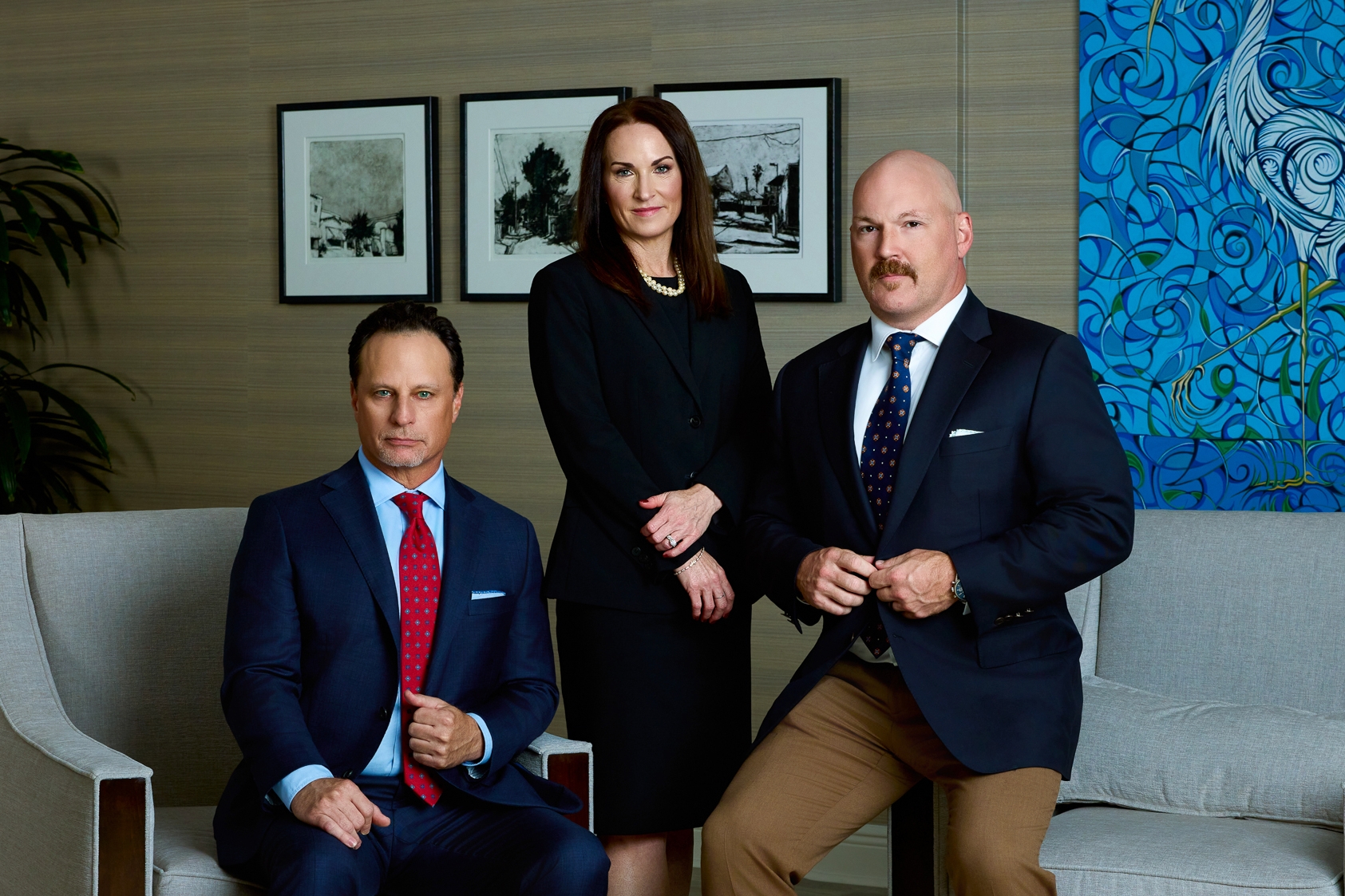
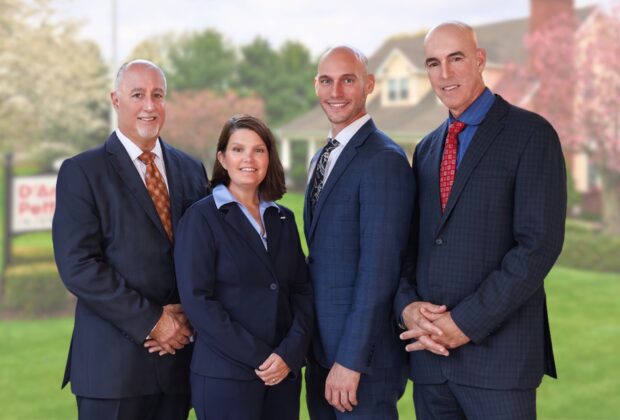
For nearly four decades, the four-lawyer boutique has built a reputation as one of the state’s premier plaintiff-side trial firms — focused, relentless, and deeply human in its approach. Led by three LCA Fellows, the firm has helped redefine the value of cases once dismissed as “too difficult,” “too expensive,” or “not worth enough.” They fight them anyway. And they win.
Leadership in Nursing Home Litigation
Long before nursing home negligence became a recognized field, Mike D’Amico was trying those cases to verdict. At a time when insurers routinely discounted deaths involving elderly residents with pre-existing conditions, D’Amico made a different calculation: every life has equal dignity.
In an early landmark case, he represented the family of a profoundly disabled nursing home resident who died after being fed improper food despite strict dietary restrictions. The tragic case was widely viewed as economically insignificant. Many believed it would settle cheaply. D’Amico refused.
He invested in expert testimony, reconstructed the medical timeline, and presented the case to a jury with the same intensity he would bring to any catastrophic injury trial. The jury returned a verdict exceeding $2.5 million, which grew to nearly $4 million with interest — a result that fundamentally shifted how such cases were valued across Connecticut.
“Mike D’Amico helped redefine what accountability looks like for vulnerable seniors,” one Connecticut trial lawyer observed. “He proved these cases matter — and that juries agree.”
Today, the firm remains a recognized Connecticut leader in nursing home abuse and neglect litigation. D’Amico, a past President of the Connecticut Trial Lawyers Association, continues to lecture and write on the complexities of long-term care litigation — from federal regulations to causation standards in frail populations.
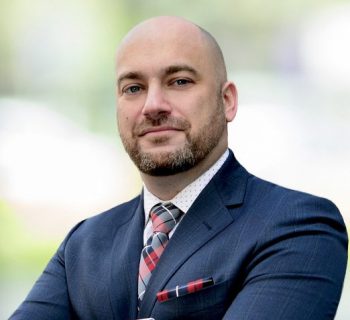
Jeremy D’Amico has expanded the firm’s elder neglect work with equal intensity. In a pending case involving a non-verbal Alzheimer’s patient who suffered multiple fractures and extensive bruising inside a facility, Jeremy retained forensic pathologists and fracture-pattern experts to determine how a patient incapable of independent movement could sustain such injuries.
The firm’s theory — that the patient was dropped during care and the incident concealed — is supported by medical evidence. The defense’s suggestion that the injuries were incidental has been met with rigorous scientific rebuttal.
“No one’s inability to speak makes them voiceless,” Jeremy says. “Our job is to uncover the truth and speak for them.”
Colleagues have taken note. “Jeremy D’Amico combines compassion with courtroom command,” one lawyer says. “He prepares every case as if it will define his career.”
Record-Setting Verdicts
The firm’s results include some of the largest verdicts in Connecticut's history.
In 2019, D’Amico Pettinicchi secured a $23 million verdict for a young boy who suffered catastrophic brain injuries in a school bus crash. The child, who had autism, could not articulate the profound neurological and personality changes he experienced after the collision. The defense argued those changes were attributable to developmental factors.
The firm’s response was exhaustive.
They reviewed years of home videos and school records. They consulted leading neurologists and autism experts. They worked with therapists who documented subtle but significant changes in cognition, behavior, and emotional regulation. They reconstructed not simply the crash, but the before-and-after reality of a child’s life.
“Anthony couldn’t describe his injury in words,” Mike D’Amico said after the verdict. “So we let the evidence tell his story.”
The jury listened — and delivered one of the largest personal injury verdicts in state history, ensuring lifelong care and support.
Then, in 2025, the firm raised the bar again.
That year, D’Amico Pettinicchi achieved a record-setting $45 million verdict in a catastrophic motorcycle accident case, the largest known motorcycle verdict in Connecticut and among the largest personal injury verdicts ever returned in the state.
The case involved devastating, permanent injuries requiring extensive life-care planning. As is common in motorcycle litigation, the defense attempted to rely on ingrained bias and blame the rider, rather than the other driver or the premises owner whose tow truck blocked the rider’s view.
The firm dismantled that strategy.
Through accident reconstruction, biomechanical analysis, human factors testimony, and detailed economic projections, the attorneys presented a disciplined, fact-driven narrative centered on preventable negligence and lifelong harm. Jurors were not asked for sympathy. They were given clarity.
“Motorcycle cases are uphill battles because of bias,” one trial observer noted. “The $45 million verdict showed what fearless preparation can accomplish.”
For Mike and Jeremy D’Amico — lifelong motorcycle riders — the case was personal, but the presentation remained clinical and precise. The verdict sent a message statewide: stereotypes are not a substitute for evidence.
The firm’s results now include multiple eight-figure and seven-figure recoveries in a jurisdiction often described as conservative in damages.
Medical Malpractice: Science, Discipline, and Judgment
Medical negligence litigation demands scientific literacy and strategic restraint. That is where Christine Norton plays a defining role.
A former medical malpractice defense attorney, Norton understands how hospitals and insurers analyze exposure. She leads pre-suit investigation and expert coordination across disciplines including radiology, anesthesia, emergency medicine, obstetrics, oncology, and surgery.
Her case evaluations are known for rigor. Weak cases are declined. Strong cases are fortified early with the appropriate experts and research.
“Christine Norton is the quiet engine behind some of the firm’s biggest cases,” a colleague notes. “Her command of the medicine is extraordinary.”
Tom Pettinicchi brings steady, persuasive courtroom presence to wrongful death and catastrophic injury trials. A seasoned trial lawyer with decades of experience, he is known for clarity rather than theatrics.
In cases involving elderly plaintiffs whose injuries accelerated decline, Pettinicchi has successfully demonstrated medical causation in the face of complex comorbidities.
“Tom Pettinicchi connects with juries because he respects them,” one observer comments. “He explains difficult concepts without oversimplifying them.”
He also regularly utilizes one of the firm’s most distinctive investments: a fully equipped in-house mock courtroom. Screened mock jurors deliberate on real presentations and provide candid feedback on liability, damages, and credibility.
“Our courtroom is about truth and insight,” Pettinicchi explains. “We learn what jurors care about before we ever step into the real courtroom.”
The process informs strategy, settlement evaluation, and witness preparation. It also gives clients the opportunity to practice testimony in a controlled environment — turning anxiety into confidence.
Few plaintiff firms in Connecticut commit that level of preparation.
A Boutique with Outsized Impact
Despite its size, D’Amico Pettinicchi operates with the infrastructure and discipline of a much larger firm. Every partner remains directly involved in each matter. Cases are prepared for trial from the moment they are accepted.
Resources are deployed strategically. Experts are retained early. Damages are modeled carefully. Nothing is assumed.
“Their preparation is relentless,” a referring attorney notes. “Defense firms know they will not outwork them.”
The firm’s verdicts — including the $23 million brain injury verdict and the $45 million motorcycle verdict — have reshaped expectations in Connecticut personal injury litigation. But within the firm, those numbers are viewed as byproducts of preparation and purpose.
Across every practice area — elder neglect, medical malpractice, catastrophic injury — the through-line is dignity.
“These cases aren’t just about money,” Jeremy D’Amico says. “They’re about accountability. When negligent conduct becomes more expensive than safe conduct, systems change.”
Mike D’Amico echoes that philosophy: “We don’t take cases because they’re easy. We take them because they matter.”
They are not the largest injury firm in Connecticut. They aim to be the most prepared. And when the fight involves the vulnerable, the overlooked, or the underestimated, Connecticut lawyers and families alike know exactly who to call.
They call it “fighting the good fight.” Connecticut juries have repeatedly agreed.