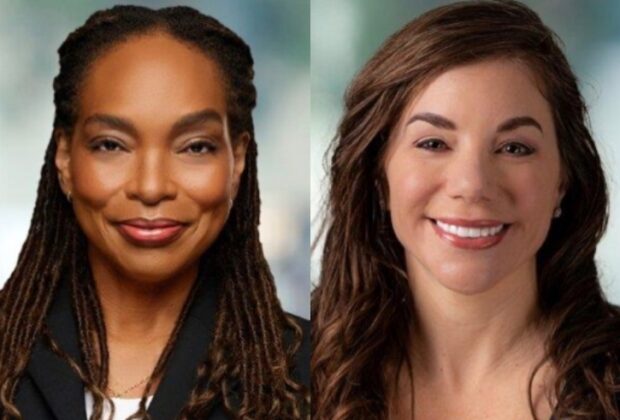
By LCA Fellows Allegra Lawrence-Hardy and Lisa Haldar of Krevolin Horst LLC
(Originally Published in Law360 on March 4, 2026, 5:49 PM EST)
Recent executive branch initiatives and related developments have suggested that diversity, equity and inclusion is on the verge of legal collapse. But the courts are telling a different story by doing what courts usually do: issue decisions. Three recent DEI-adjacent decisions point in the same direction. Across different contexts, courts are not so much taking sides in a political debate as enforcing the procedural rules for litigating one: the right plaintiff, the right challenge and the right proof.
Missouri v. Starbucks: Who May Sue
The Feb. 5 decision in Missouri v. Starbucks Corp. is a case about having the right plaintiff as much as it is a DEI case.
The state of Missouri tried to position itself as the proper enforcer of anti-discrimination laws against Starbucks' internal DEI initiatives, including programs connecting people of color and LGBTQ+ employees with senior leadership, employee affinity groups that are open to all employees, and DEI-related metrics.
The state cast these initiatives as "a guise for discriminatory, company-wide practices that placed non-white, non-male, and other 'preferred minorit[y]' employees and applicants in an unlawful position of advantage over the rest of Defendant's workforce."[1]
Before turning to the merits of the DEI programs, however, the U.S. District Court for the Eastern District of Missouri addressed a threshold right-plaintiff question: whether Missouri had standing to sue under parens patriae, the doctrine that can allow a state to protect the well-being of its residents.[2]
The district court read the doctrine narrowly, relying on the U.S. Supreme Court's 1982 decision in Alfred L. Snapp & Son Inc. v. Puerto Rico to define its limits.[3] In Snapp, the Commonwealth of Puerto Rico invoked parens patriae standing to sue apple growers that allegedly refused to employ migrant workers because of their Puerto Rican ethnicity.[4]
Although only a few hundred job opportunities were actually at stake, the Supreme Court held that Puerto Rico had parens patriae standing because it had a strong quasi-sovereign interest in protecting its residents from the political, social and moral harms of discrimination — especially discrimination that stigmatizes an entire group — even if the immediate financial impact was limited.[5]
This is the kind of concrete discrimination or systemic exclusion that Snapp contemplates for parens patriae standing. But in Starbucks, Missouri's theory tried to jump the Snapp guardrails, mounting an abstract challenge to Starbucks' internal DEI initiatives.[6]
The district court rejected this inversion of the parens patriae doctrine, finding that, unlike in Snapp, the state had failed to identify any specific individual who suffered a particularized injury that was traceable to Starbucks' DEI practices.[7] Alternatively, the court concluded that even if Missouri could proceed on parens patriae standing, the claims were implausible under traditional Title VII and Section 1981 principles.[8]
National Association of Diversity Officers in Higher Education v. Trump: What Kind of Challenge
If Starbucks is about who gets through the courthouse door, i.e., a plaintiff with standing, National Association of Diversity Officers in Higher Education v. Trump is about what kind of challenge can open it.
In National Association of Diversity Officers, the plaintiffs brought facial constitutional challenges to three provisions across two executive orders, both issued in January 2025.[9] They challenged the following two provisions in Executive Order No. 14173: (1) what the plaintiffs called a certification provision, requiring certain federal contracts and grants to include a certification that the recipient does not operate any DEI program that violates applicable federal anti-discrimination law; and (2) a so-called enforcement threat provision, directing agencies to prepare reports identifying plans to deter DEI programs that constitute illegal discrimination.[10]
The plaintiffs also challenged a termination provision in Executive Order No. 14151 that directed agencies to terminate all DEI initiatives and programs "to the maximum extent allowed by law."[11]
On Feb. 6, the U.S. Court of Appeals for the Fourth Circuit held that the plaintiffs lacked standing to challenge the enforcement threat provision because they failed to establish both redressability and injury in fact.[12]
The court reached the opposite conclusion for the termination and certification provisions, holding that the plaintiffs plausibly alleged a classic pocketbook injury — lost or threatened access to federal funding— that was sufficient for Article III standing.[13]
Standing, however, did not carry the day for the plaintiffs. Although the Fourth Circuit concluded that the plaintiffs had adequately alleged injury as to the termination and certification provisions, it held that the facial constitutional challenges they brought demanded more than the record could support at that stage.[14]
The court's opinion does not foreclose meaningful challenges to these policies; rather, it reflects the limits of the particular vehicle these plaintiffs chose. As the concurrence emphasized, the Fourth Circuit was presented "with a facial challenge to two Executive Orders concerning certain DEI programming, not the legality or termination of any particular DEI program. That makes all the difference."[15]
The lesson of the case, then, is not that plaintiffs lack a path forward. To the contrary, even the majority pointed to one, noting that plaintiffs may sue government officials who terminate grants or contracts if injury arises from the directives' enforcement in particular circumstances.[16]
Instead, quoting prior precedent, the decision underscored that facial invalidation, unlike relief on an as-applied challenge, remains "strong medicine" that should be employed "sparingly and only as a last resort," and the court declined to administer that medicine on the record before it.[17]
Diemert v. City of Seattle: What Kind of Proof
If Starbucks is about standing and National Association of Diversity Officers is about the nature of the claim, Diemert v. City of Seattle is about the merits — namely what standard applies and what proof is required to meet it.
The February 2025 decision, which is currently on appeal, underscores that DEI-specific standards do not govern DEI disputes. As with any employment law dispute, liability turns on whether the plaintiff can satisfy the established elements of the particular cause of action.
In Diemert, the plaintiff alleged that his participation in his employer's DEI trainings created a hostile work environment, pointing to alleged comments by co-workers and supervisors that he found offensive as a straight white man.[18] On summary judgment, the U.S. District Court for the Western District of Washington rejected the notion that workplace DEI and anti-discrimination trainings are "per se unlawful" or "inherently racist."[19]
The court applied the familiar hostile work environment framework: whether the DEI trainings caused the plaintiff to experience objectively hostile race-based harassment that was severe or pervasive enough to alter the terms and conditions of his employment.[20] The court found that he could not meet that standard based on passive exposure to concepts such as white privilege, white fragility, implicit bias or critical race theory.[21]
The case is now on appeal to the U.S. Court of Appeals for the Ninth Circuit.[22]
The Through Line
Whatever one's views of DEI-related executive orders or workplace programs, these cases share a common theme: Courts are not writing new DEI rules. They are applying familiar guardrails — requiring the right plaintiff, the right challenge and the right proof.
For employers, that means the basics still matter. Making employment decisions for lawful reasons is still lawful conduct. Decisions like hiring, promotions, pay and assignments should remain job-related, and should be based on clear and objective criteria, applied consistently and documented contemporaneously — without quotas or outcomes tied to protected characteristics.
For mentoring and affinity groups, employers should ensure that participation rules are neutral and open to all employees, and avoid messaging or programs that imply exclusivity. With DEI related training, both the content and the delivery matter.
Training should be grounded in workplace expectations, compliance and equal opportunity — promoting respectful and inclusive conduct, addressing barriers, and reducing bias in decision making.
Delivery should be professional and consistent. Use experienced facilitators, avoid stereotyping or singling out any group, and provide a channel for questions, feedback and complaints.
And when concerns about DEI programming do arise, they should be handled like any other workplace complaint: taken seriously, investigated promptly, and addressed appropriately and consistently.
The takeaway for employers is not that the law has been rewritten. It is that DEI programs, like any other workplace initiative, should be structured and carried out in ways that comply with existing laws, because according to these three recent decisions, the governing standards remain the same.
LCA Senior Fellow Allegra Lawrence-Hardy is a co-managing partner and LCA Fellow Lisa Haldar is a partner at Krevolin Horst LLC. The opinions expressed are those of the author(s) and do not necessarily reflect the views of their employer, its clients, or Portfolio Media Inc., or any of its or their respective affiliates. This article is for general information purposes and is not intended to be and should not be taken as legal advice.
[1] Missouri v. Starbucks Corp., No. 4:25-cv-00165-JAR, 2026 WL 309714, at *1-4 (E.D. Mo. Feb. 5, 2026). 1-4.
[2] Starbucks, 2026 WL 309714, at *12.
[3] Starbucks, 2026 WL 309714, at *13.
[4] See Alfred L. Snapp & Son, Inc. v. Puerto Rico, 458 U.S. 592, 597-98 (1982).
[5] See Snapp, 458 U.S. at 609.
[6] Starbucks, 2026 WL 309714, at *1-4.
[7] Starbucks, 2026 WL 309714, at *15.
[8] Starbucks, 2026 WL 309714, at *14-15.
[9] See Nat'l Ass'n of Diversity Officers in Higher Educ. v. Trump, No. 25-1189, 2026 WL 321433, at *1
(4th Cir. Feb. 6, 2026).
[10] Nat'l Ass'n of Diversity Officers, 2026 WL 321433, at *1.
[11] Nat'l Ass'n of Diversity Officers, 2026 WL 321433, at *1.
[12] Nat'l Ass'n of Diversity Officers, 2026 WL 321433, at *4.
[13] Nat'l Ass'n of Diversity Officers, 2026 WL 321433, at *5.
[14] Nat'l Ass'n of Diversity Officers, 2026 WL 321433, at *9, *11.
[15] Nat'l Ass'n of Diversity Officers, 2026 WL 321433, at *11 (Diaz, Chief J., concurring).
[16] Nat'l Ass'n of Diversity Officers, 2026 WL 321433, at *9.
[17] Nat'l Ass'n of Diversity Officers, 2026 WL 321433, at *7.
[18] Diemert v. City of Seattle, 776 F. Supp. 3d 922, 929, 931, 938-39 (W.D. Wash. 2025), appeal filed,
No. 25-1188 (9th Cir. Feb. 5, 2025).
[19] Diemert, 776 F. Supp. 3d at 939-40.
[20] Diemert, 776 F. Supp. 3d at 938.
[21] Diemert, 776 F. Supp. 3d at 941.
[22] No. 25-1188 (9th Cir. Feb. 5, 2025).